ARCHITECTS&BOTANICAL Co., Ltd. Representative: Kenichiro Koyama
YANBARU HOSTEL, whose mission is to create a “system for regional revitalization” through its hotel business. With unique ideas, it attracts people who discover new value in Kunigami Village.
Regional Revitalization as Concept
Renovating a long-standing hotel that operated for about 40 years, YANBARU HOSTEL opened on June 1, 2019. Its exterior, seamlessly blending into the townscape while preserving its nostalgic charm, contrasts with its stylish interior—a gap that elicits spontaneous admiration. Kenichiro Koyama, the representative handling spatial design, expresses confidence in his strategy that breaks conventional hotel management concepts: “We want to build a hotel in an unpopulated area, create events to draw people in, revitalize Kunigami Village, and eventually involve all of Okinawa. I believe a hotel with the concept of revitalizing a village is rare even globally.”
Catching the eye of strangers
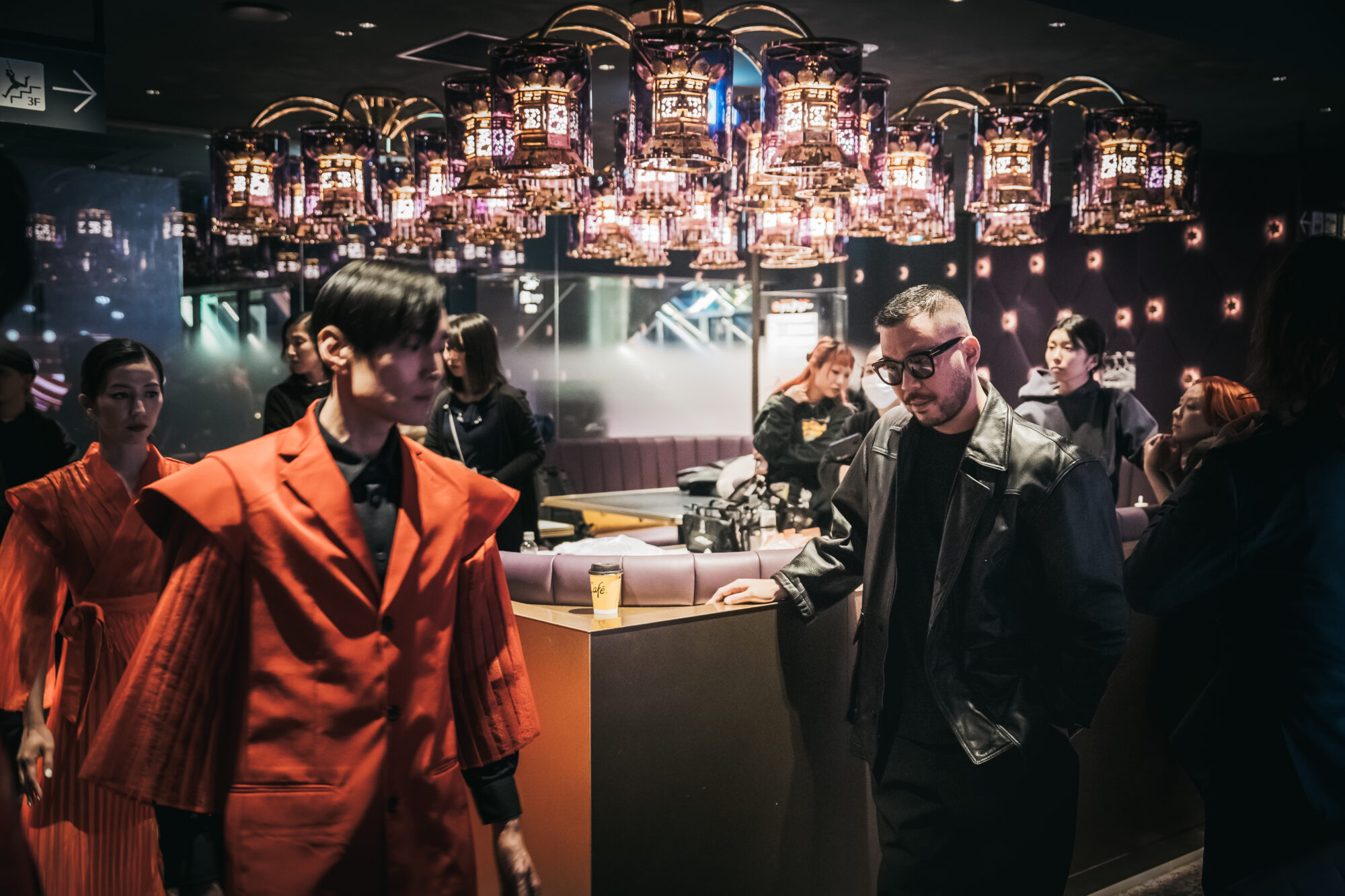
“Creative power has always pioneered new eras. That’s why creative ideas cannot be overlooked,” says Koyama. Hotel management, combining spatial design, service, and community—the culmination of his creative journey in displays and interiors for commercial facilities—was a dream he always wanted to realize. Hearing about issues like population decline and aging in Kunigami Village, his wife’s hometown, he decided to leverage his career as a spatial designer to contribute to regional revitalization, making his hotel dream a reality. “Yanbaru is a place where, precisely because there’s no noise or unnecessary distractions, your senses are sharpened and your imagination is stirred. I want to attract creators from around the world who wish to hone their skills here,” says Koyama. To draw the attention of those unfamiliar with Yanbaru, he held pre-events in Kanagawa, Tokyo, Osaka, Fukuoka, and Nagoya, collaborating with each region around themes of music and creativity to introduce Yanbaru.
Not Just a Stopover
Hostels centered around shared spaces have lower recognition than conventional hotels. However, Koyama focuses on strategies and mechanisms that aren’t reliant on travel sites for attracting guests and aren’t swayed by social conditions like economic downturns. One such initiative is “Dormy Commu” (Dormitory Community). Domyu Commu is a program where six strangers form a team, share a room for a week, create ten photos and a video themed around Yanbaru, and compete against six other teams. The goal is to raise the hostel’s profile through Domyu Commu, let people discover the joy of sharing a room with strangers, and attract visitors to the region. Results are already emerging, such as participants becoming residents. The number of ideas for gathering people is too numerous to count on both hands. The goal visible beyond this horizon is not to end at a single point but to connect it to the next generation. “If diverse people gather here from around the world, young locals won’t have to leave to find inspiration—they can find it right here.” What ingenious mechanisms will Mr. Koyama unveil next? We can’t take our eyes off his ideas.